

Microbiota assembly in Zostera marina during early host development across controlled growth experiments
Gina Chaput, Emma A. Deen, Eric Q. Pham, Sarah Crystal, Andrew Matayoshi, Peter Andeer, Trent R. Northen, Jonathan A. Eisen, John J. Stachowicz, E. Maggie Sogin
ABSTRACT
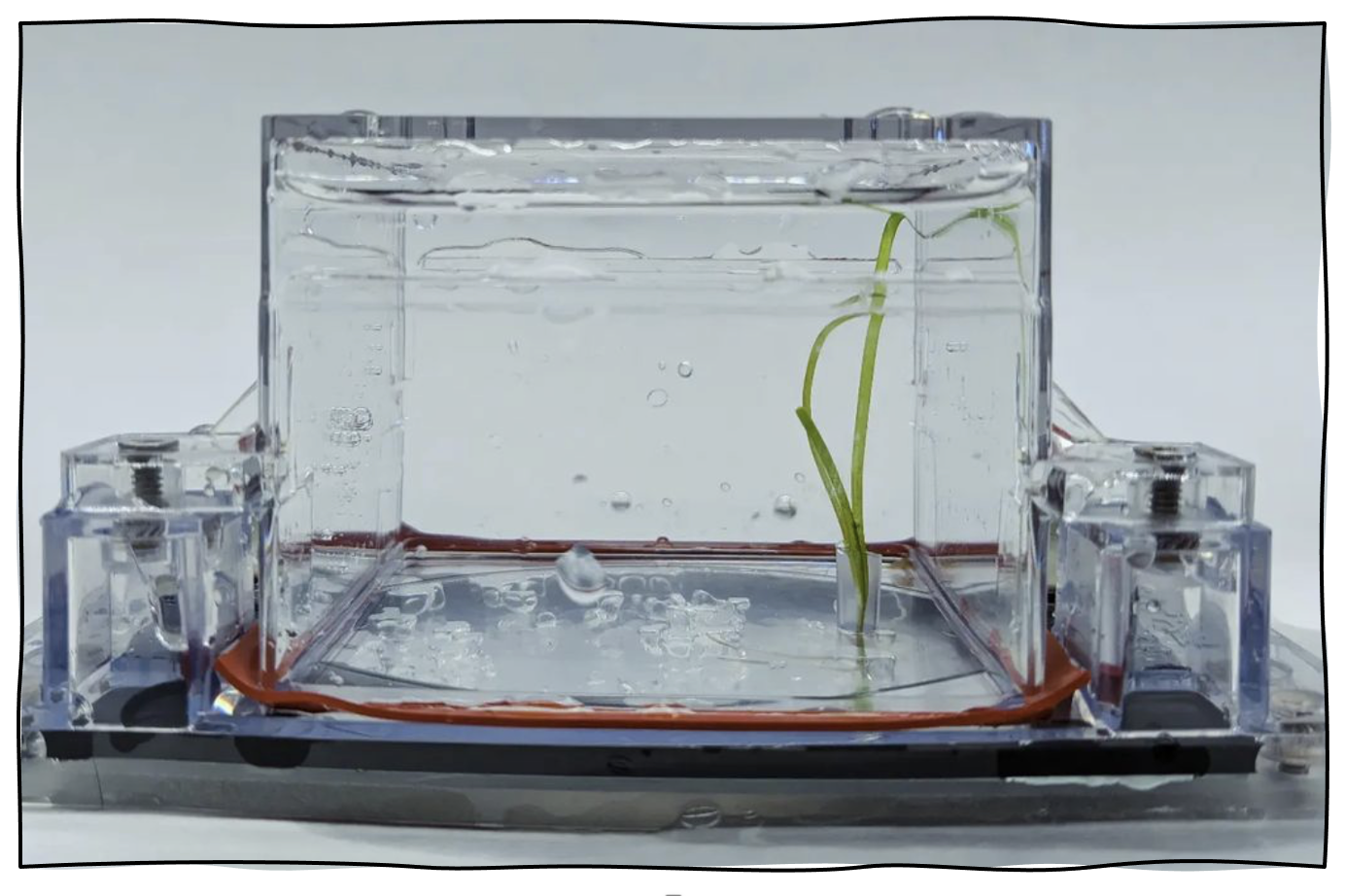
Seagrass restoration practices are evolving to leverage microbiome applications, similar to agricultural systems that have demonstrated how targeted microbial communities enhance crop resilience in challenging environments. While adult seagrass microbiome research has expanded significantly, research on the seed microbiome remains critically understudied. This gap is important given that seeds represent a large portion of restoration efforts. Advancing seed microbiome research requires standardized experimental systems for controlled plant–microbe interaction studies, which are currently lacking in seagrass research. Here, we tested fabricated ecosystem devices (EcoFAB 2.0) as a standardized system for growing Zostera marina (eelgrass) seedlings, enabling a controlled study of aquatic plant–microbe interactions. Using these chambers, we addressed three key questions: (i) can we reliably grow eelgrass in a controlled laboratory setting, (ii) can we manipulate eelgrass microbiota assembly and its long-term trajectory, and (iii) can we detect shifts in the microbiota during plant development (host filtering)? Host morphology measurements and 16S rRNA gene amplicon sequencing were used to track microbiota assembly across three early developmental stages of the host. Because plants were grown in a sterile environment, surface sterilization of seeds (bleach and ethanol) removed epiphytes without disturbing the shared endophytic community, yet microbiota composition remained divergent at Stage 6 (143 differentially abundant ASVs), indicating that seed coat epiphytes make a lasting and distinct contribution to assembly trajectory. We also identified 26 stage-specific indicator ASVs across eelgrass development, suggesting stage-specific microbial associations during seedling establishment. This work demonstrates the potential for targeted manipulation of the microbiome in seagrass for restoration efforts.
IMPORTANCE
Using the Fabricated Ecosystem 2.0 (EcoFAB 2.0), we were able to successfully control the microbial environment of eelgrass, Zostera marina, resulting in the reduction of epiphytes and maintaining low microbial diversity across plants without compromising the morphology and growth of seedlings. Our findings advance the marine plant model system, Z. marina, by identifying taxonomic indicators across life stages. This work lays the foundation for a targeted understanding and application of microbiomes for seagrass restoration, bridging the critical knowledge gap between agricultural seed microbiome success and marine restoration applications.